Closing the co-creation cycle with evaluation
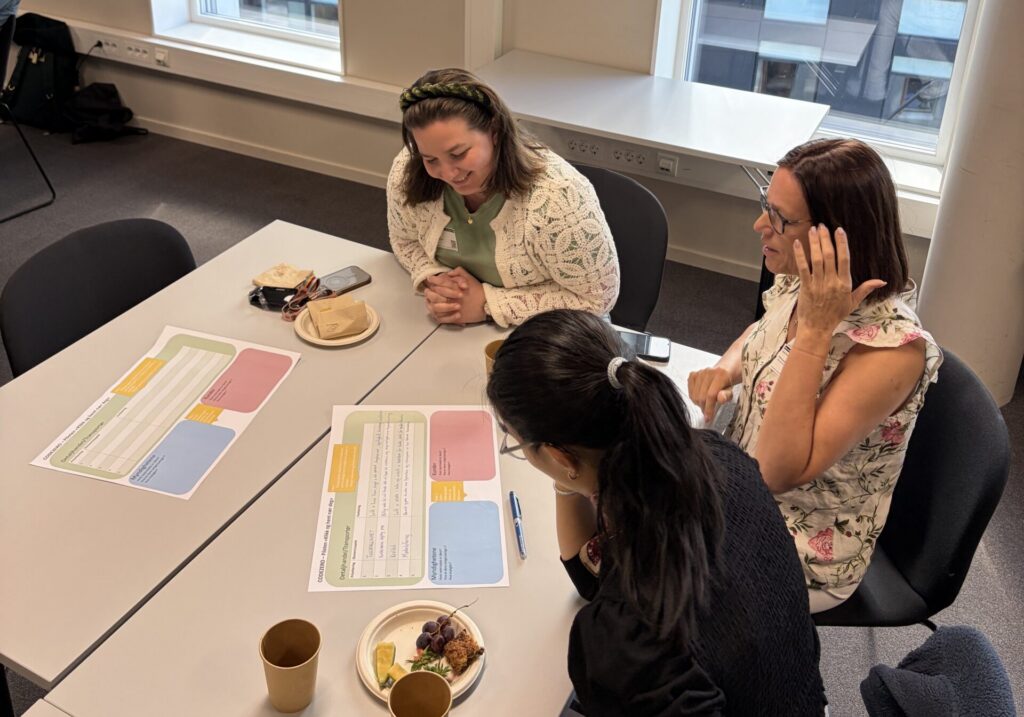
Oslo, Milan, Antwerp and Utrecht have finalised the round of their third and last workshop, marking the conclusion of CodeZERO's co-creation cycle, which began with the first co-design sessions in 2025 and evolved through pilot testing, stakeholder engagement and continuous learning.
In these sessions, the pilot leaders of Oslo, Milan, Antwerp and Utrecht have brought together retailers, logistics providers, public authorities and citizens in co-creation workshops to evaluate the four pilots. The first workshops focused on understanding local challenges, the second on co-designing solutions, and the third on assessing pilot outcomes and discussing opportunities for transfer and upscaling.
While a different solution was tested in each city, the workshops shared a common goal: ensuring that innovative delivery models respond to local needs while reducing environmental impacts and improving urban liveability.
Oslo
The third workshop in Oslo provided an opportunity for stakeholders to reflect on the conditions needed for the proposed pilot solutions and for a future scaling. Building on the challenges and concepts developed during the previous co-creation workshops, participants discussed what would make sustainable delivery solutions attractive for consumers, businesses and public authorities alike. Despite their different perspectives, stakeholders shared a common view that future urban logistics solutions must balance convenience, sustainability and economic viability.
A key takeaway from the discussion was that coordination, rather than technology, remains the principal challenge for improving the sustainability of last-mile deliveries. Participants noted that many of the building blocks already exist in Oslo, including parcel lockers, pick-up points and low-emission delivery vehicles. The focus should therefore be on improving collaboration between public authorities, retailers, logistics operators and consumers. Stakeholders highlighted the importance of accessible pick-up solutions, efficient use of urban space, clear communication with users and digital tools that enable better coordination of deliveries and logistics activities across the city.
The workshop also explored the factors that should guide future replication and upscaling efforts of the Click and Collect Near You concept. Participants identified simplicity, customer satisfaction, economic feasibility and effective use of urban space as essential criteria for success. The city of Oslo emphasised reducing vehicle kilometres travelled and making better use of existing infrastructure, while IKEA and Bring focused on operational efficiency and customer uptake. The discussions reinforced a broader lesson from the Oslo co-design process: creating more sustainable urban logistics systems requires continuous dialogue and cooperation between stakeholders.
Milan
The third co-creation workshop in Milan brought together both returning participants and additional stakeholders to reflect on the pilot results and discuss the conditions needed for future scaling and replication. Stakeholders reviewed the performance of cargo bikes and tricycles using a range of operational indicators, including route duration, route length, transported weight, number of parcels and delivery stops. A key conclusion was that while cargo bikes offer greater manoeuvrability in dense urban environments, tricycles can provide advantages for heavier or bulkier goods, weather protection and operational flexibility.
The discussions highlighted the importance of flexible and integrated delivery models. Stakeholders stressed that future operations should rely on mixed fleets that combine different vehicle types according to specific needs rather than seeking a one-size-fits-all solution. Participants also noted that dense urban areas are particularly well suited to these models because consolidation and shorter distances improve operational efficiency. Beyond environmental performance, the workshop recognised the social dimension of the Milan pilot, particularly the role of So.De. in promoting fair working conditions and socially responsible logistics practices. Stakeholders considered this social sustainability component an important strength that should be preserved as the model evolves.
Participants agreed that communication should go beyond generic sustainability messages and clearly explain the environmental, operational and social benefits of different delivery options. The work carried out through the pilot, including improvements to the IKEA checkout process and the use of postcards distributed with deliveries, was seen as a valuable way of making sustainable logistics more visible and understandable to consumers. Participants also highlighted the role of public authorities in creating favourable conditions for cycle-based logistics through access to urban space, support for micro-hubs, coherent regulations and targeted incentives.
Antwerp
The third co-creation workshop in Antwerp focused on reflecting on the pilot’s results and exploring the conditions for scaling PUDO points, and checkout improvements and joint communication campaigns. Participants examined how different stakeholder groups assessed the delivery options tested during the pilot. While the analysis revealed a clear overall preference for delivery at the shop, the discussion highlighted the different priorities behind this result. Consumers valued the flexibility and security offered by collection points, particularly when compared to unattended home deliveries. Retailers recognised the commercial benefits of in-store collection, which can generate additional customer visits and purchases, while bpost highlighted the operational efficiencies that come from consolidating deliveries. From the perspective of the City of Antwerp, delivery at the shop and parcel lockers were also seen as promising options for reducing urban traffic and supporting broader sustainability objectives.
A key lesson from the workshop was the importance of balancing operational efficiency with user needs. Participants stressed that the continued expansion of parcel locker and pick-up networks should maintain the consolidation benefits that make these solutions sustainable while ensuring they remain accessible to consumers. Particular attention was given to the needs of older users, who may face barriers when interacting with digital locker technologies and who often place greater value on human interaction, helping to explain the strong support for delivery at the shop.
Stakeholders agreed that awareness raising remains important, but highlighted that communication should focus on tangible benefits such as convenience, price and quality of service rather than sustainability alone. Retailers and logistics providers stressed the value of making sustainable delivery options more visible and attractive during the checkout process, while public authorities were encouraged to support local communication campaigns and facilitate the development of parcel lockers in public space.
Utrecht
Unlike the workshops in other pilot cities, the discussion in Utrecht centred on operational experiences rather than a formal multi-criteria assessment. Stakeholders reflected on the performance of the pilot, which tested smaller electric delivery vehicles and a mobile microhub for grocery deliveries in the inner city. One of the main findings was that smaller vehicles were less efficient than Jumbo's conventional delivery model, as they could handle fewer orders per hour and offered more limited carrying capacity. At the same time, the pilot demonstrated that the small electric vehicle had a greater operational range than expected, allowing deliveries to be made directly from Jumbo's hub in Nieuwegein without relying on the planned mobile microhub.
A key takeaway from the workshop was that smaller vehicles are not automatically a more sustainable solution. Participants emphasised that vehicle choice must be considered together with delivery volumes, operational efficiency, urban conditions and consumer expectations. Citizens noted that convenience remains the dominant factor influencing delivery choices and indicated that they would only consider more sustainable options if these did not involve additional costs or reduced convenience. The discussions also revealed important differences between delivery flows. Grocery deliveries were generally perceived as organised and relatively low in nuisance, whereas parcel deliveries were more frequently associated with traffic disruption and poor parking behaviour. Stakeholders concluded that solutions such as microhubs may be better suited to parcel deliveries, hospitality logistics or dense city-centre areas rather than large-scale grocery distribution.
Participants also discussed the role of communication and policy in supporting sustainable urban logistics. The workshop highlighted that sustainability messages alone are unlikely to change consumer behaviour. More tangible messages, such as explaining that delivery vehicles are already operating in the neighbourhood and can consolidate deliveries efficiently, were considered more effective than generic environmental claims.
From a policy perspective, stakeholders stressed the importance of clear and predictable regulations, particularly as logistics operators make long-term investments in vehicles, infrastructure and distribution systems. The discussions further reinforced that sustainable delivery solutions must be adapted to local conditions, including street design, neighbourhood density and access restrictions.
Common lessons, local solutions
There is no single solution to sustainable urban logistics. What works in Antwerp may not be suitable for Utrecht, just as solutions tested in Milan may need adaptation before being applied in Oslo.
To ensure success, citizen involvement remains essential, and communication plays a decisive role. Across all pilots, participants stressed that sustainable delivery options need to be visible, easy to understand and connected to benefits that people can relate to directly, whether convenience, reliability, affordability or quality of service.